A full bathroom renovation in the UK typically costs between £4,000 and £12,000 depending on the size of the room and the extent of the work. For most homeowners, this is not an annual or even decadal possibility. But a bathroom that looks significantly better than it did — cleaner, more considered, more modern — is achievable for a fraction of that cost if the right elements are targeted.
Re-grouting: The Change That Looks Like a Renovation
Grout discolouration is the single factor that most often makes an otherwise adequate bathroom look dated and neglected. The tiles themselves may be perfectly serviceable; the dark or stained grout lines between them create the impression of dirt and age. Re-grouting — either replacing the grout entirely or using a grout pen to refresh the colour — is the highest-impact, lowest-cost intervention available in a bathroom renovation.
Grout pens from brands like HG or Everbuild are available from most UK DIY retailers for under £10 and can transform the appearance of tiled walls and floors in a few hours. For tiles where the grout has cracked or become genuinely unhygienic, removing and replacing the grout (a process that takes a day and requires a grout rake from any hardware store) is more thorough.
Taps and Shower Fittings: Where £100 Goes a Long Way
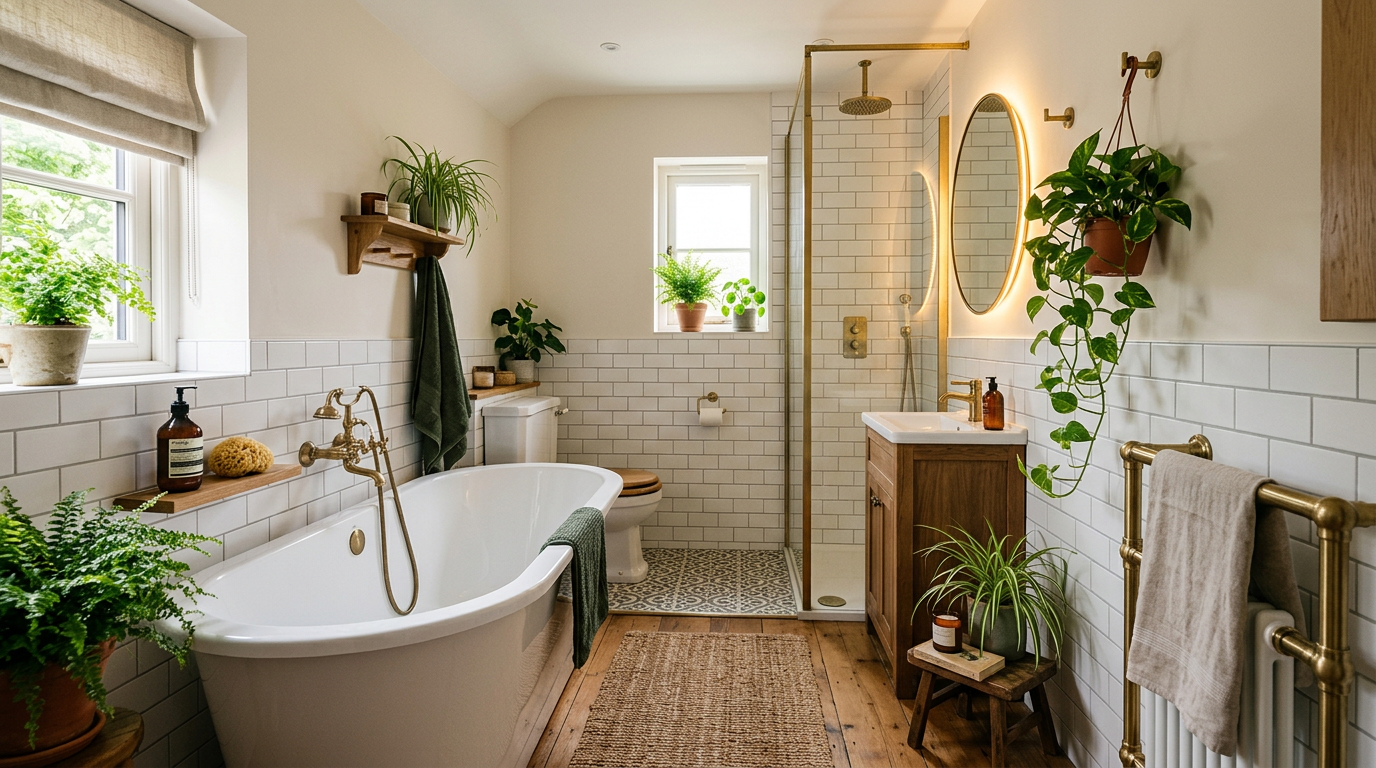
Taps are among the most visible elements of a bathroom. Replacing standard chrome taps with brushed brass, matte black, or gunmetal alternatives takes a bathroom from generic to designed at a cost of £30–£80 per tap — and the replacement is DIY-accessible if the existing pipework connections are compatible. Matching the finish across taps, towel rail, toilet roll holder, and other accessories creates a cohesive effect that reads as deliberate design.
Shower heads are another easy switch. A rainfall shower head — widely available for under £40 from B&Q, Screwfix, or Victorian Plumbing — transforms the shower experience and the appearance of the space. The replacement requires only a wrench and takes under fifteen minutes.
Mirrors and Lighting: The Most Underestimated Combination
A statement mirror is one of the most affordable upgrades in a bathroom. Large, frameless mirrors reflect more light; framed mirrors add warmth and character. The combination of a good mirror and improved lighting — specifically, a backlit or illuminated mirror which provides flattering, even light — transforms both the functionality and the atmosphere of a bathroom at a cost of £50–£200.
Most UK bathrooms are lit by a single ceiling fitting that creates harsh shadows. Adding a mirrored cabinet with integrated LED lighting replaces the mirror, adds storage, and improves the lighting quality in a single purchase.
Plants and Textiles: Zero Installation Required
Bathrooms with natural light benefit considerably from plants. Species that tolerate high humidity and indirect light — spider plants, ferns, snake plants, pothos — add texture and life to a bathroom without any ongoing maintenance demands. A single plant on a window sill or shelf makes an observable difference.
People underestimate what a quality bath mat and coordinated towels do for a bathroom. It costs £40 to buy a set of matching towels and a proper bath mat. The room looks completely different. It's the easiest win there is.
New towels, a coordinated bath mat, and a simple soap dispenser set (replacing the collection of individual bottles that accumulates in most bathrooms) constitute a low-cost refresh that requires no tools and takes fifteen minutes.
What Actually Requires a Plumber
Replacing a bath, a toilet, or moving pipework requires a qualified plumber and, in many cases, a Part P registered electrician for any new electrical circuits. The Consumer Rights Act 2015 provides protection if tradespeople fail to complete work to a satisfactory standard — keep all quotes, receipts, and contracts in writing.
Editorial note: For informational purposes only. FireDesigners is an independent publication by Newsquest Media Group Limited.