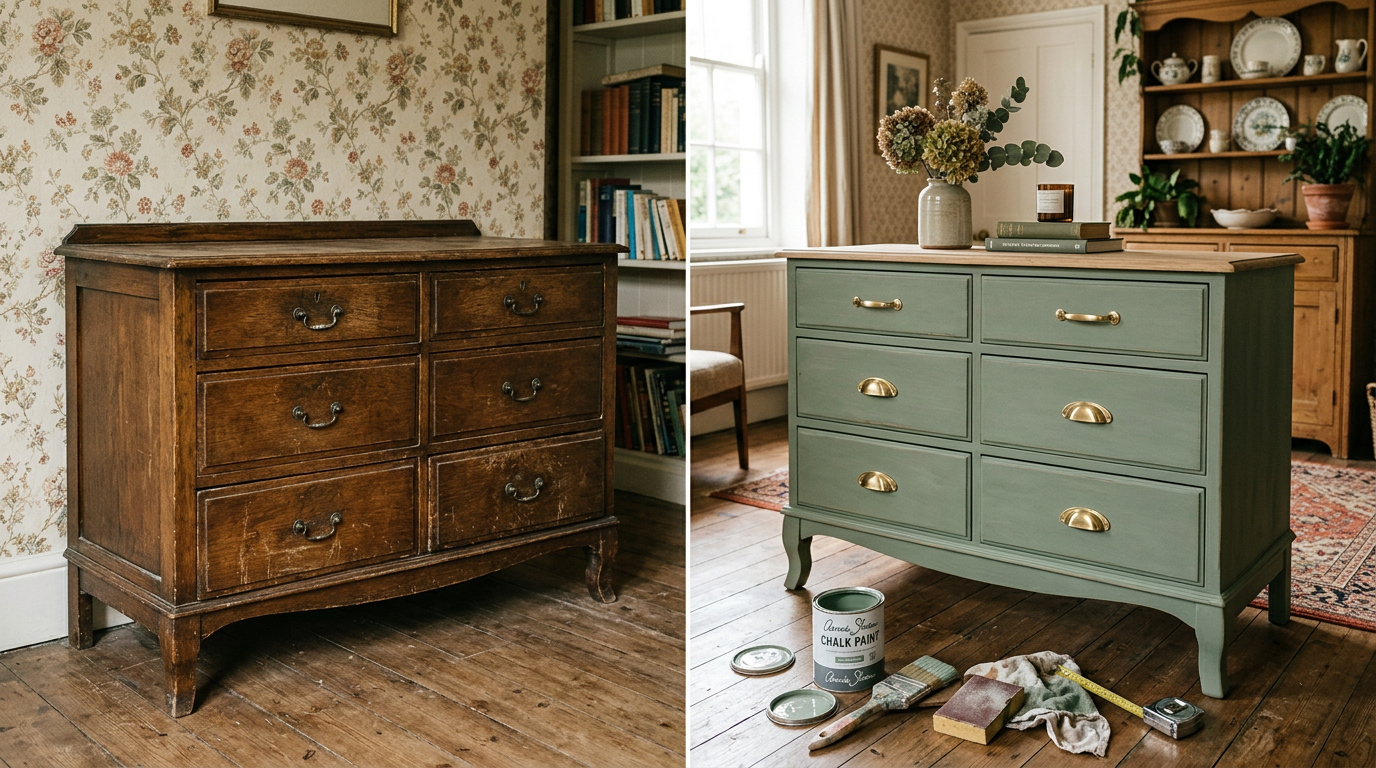
Britain has a tradition of furniture that was built to last — and a more recent tradition of replacing it unnecessarily. A solid wood chest of drawers from the 1970s or 1980s, available for £20–£50 from charity shops, car boot sales, or Facebook Marketplace, frequently has better joinery and more durable materials than new equivalents at three or four times the price. The surface condition is almost always the reason it has been discarded.
The Case for Upcycling in 2026
Furniture upcycling has moved from a niche activity to a mainstream one over the past decade, driven partly by sustainability concerns, partly by the rising cost of new furniture, and partly by the appeal of creating something unique. The market for chalk paint, furniture wax, and upcycling supplies has grown significantly in the UK, and the community of practitioners sharing work online has made the skills more accessible.
The financial case is straightforward: a solid chest of drawers purchased for £30, painted with £20 of chalk paint, and fitted with £15 of new brass handles is a piece of furniture that would cost £200–£400 from a contemporary retailer — if it existed at all in the same style and quality of construction.
Selecting the Right Piece
Not all old furniture is worth upcycling. The most important filter is the material of the carcass. Solid wood — oak, pine, mahogany, teak — takes paint well, is structurally robust, and rewards the effort. MDF and particleboard furniture from the 1990s onwards is more difficult to work with: it absorbs paint unevenly, is more prone to damage from moisture, and the results are generally less convincing.
The structure matters as much as the material. Drawers should slide smoothly or close to it; the frame should be square. Structural repairs — regluing loose joints, replacing drawer runners — are straightforward but add time. Check before buying.
Chalk Paint: Why It Works
Chalk paint — popularised by Annie Sloan but now available from numerous brands including Frenchic, Rust-Oleum, and own-brand versions from B&Q and Wilko — is the standard choice for furniture upcycling because it requires minimal surface preparation. It adheres to most surfaces without priming, dries to a matte finish that is easy to sand and distress, and is available in a wide range of colours.
The main alternatives are standard emulsion (works but requires more preparation) and specialist furniture paint (more durable but less forgiving). For first-time projects, chalk paint is the most accessible starting point.
Preparation: The Step That Determines the Result
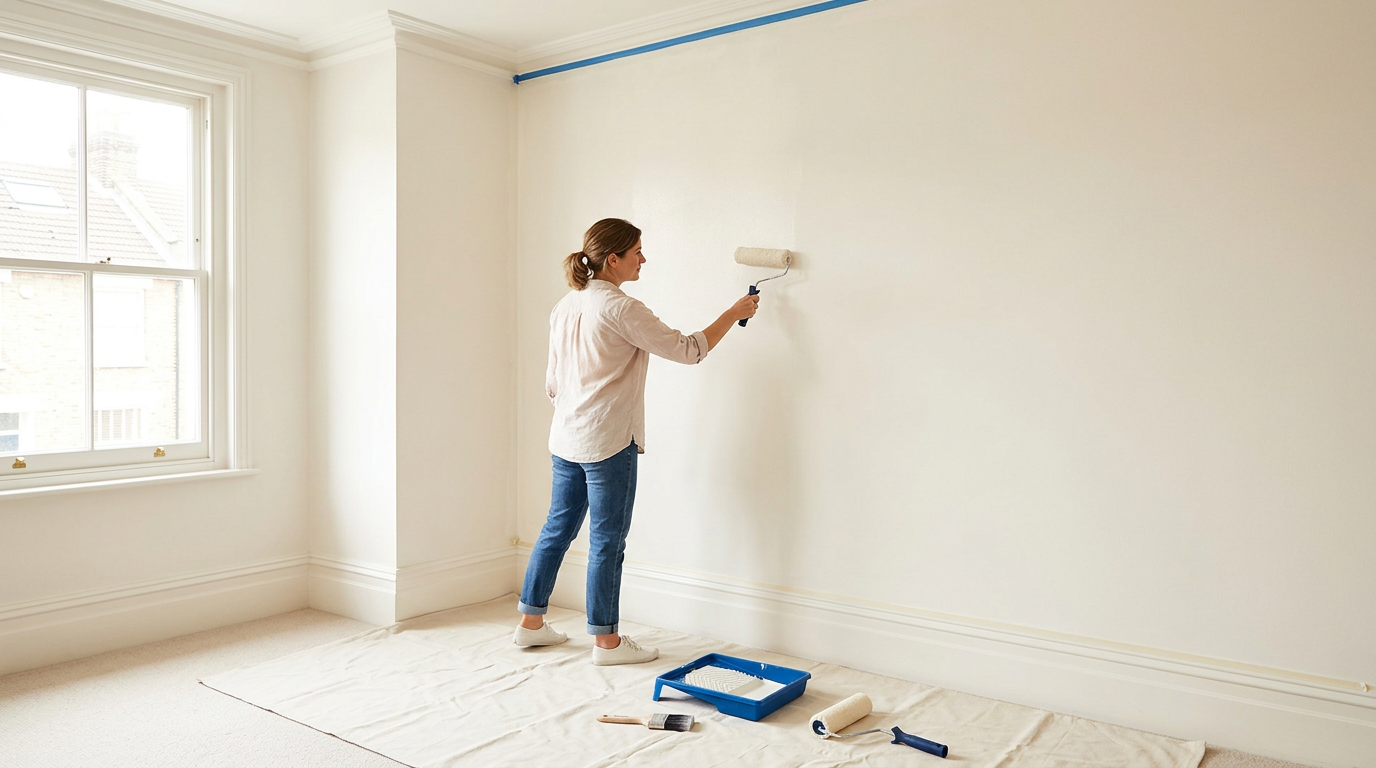
The single most common mistake in furniture upcycling is inadequate preparation. The surface must be clean and free of grease — a wipe-down with sugar soap or a specialist degreaser is sufficient for most pieces. Wax finishes on old furniture should be removed with a wax remover or white spirit before painting; paint applied over wax will not adhere properly and will peel.
Light sanding — 120-grit sandpaper — creates a key for the paint to adhere to and removes any minor damage or imperfections. Wipe away sanding dust before painting. These twenty minutes of preparation make the difference between a result that lasts five years and one that starts peeling within six months.
The transformation isn't in the painting — it's in the handles. A set of £2 handles from B&Q and a set of £8 ceramic handles from an Etsy seller make the same chest of drawers look completely different. Hardware is where the character comes from.
Application and Finishing
Two coats of chalk paint, applied with a brush or roller and allowed to dry between coats (typically 30–60 minutes), is the standard approach. A third coat can be added for a more opaque finish. Chalk paint is forgiving of brush marks — a slight texture is characteristic of the style rather than a defect.
Sealing is essential for longevity. Furniture wax (Annie Sloan, Frenchic, or own-brand) applied with a cloth and buffed after 24 hours provides a durable, slightly sheen finish. Chalk paint lacquer spray is an alternative for maximum durability — particularly useful for items that will receive heavy use, such as drawers and table tops.
Hardware: The Detail That Changes Everything
New handles, knobs, and drawer pulls are the final step and arguably the most impactful detail in the result. Brass, matte black, ceramic, and glass options are all widely available online (Etsy, Amazon, and eBay all have extensive selections) and in B&Q and specialist hardware retailers. The cost for a full set of handles for a chest of drawers is typically £10–£40.
Editorial note: For informational purposes only. FireDesigners is an independent publication by Newsquest Media Group Limited.